Context graph
The context graph connects code and infrastructure so Jina can trace a change beyond the diff. In the demonstration below, a checkout change touches shared rounding code also used by refunds. A related incident gives the agents more context for investigating that path.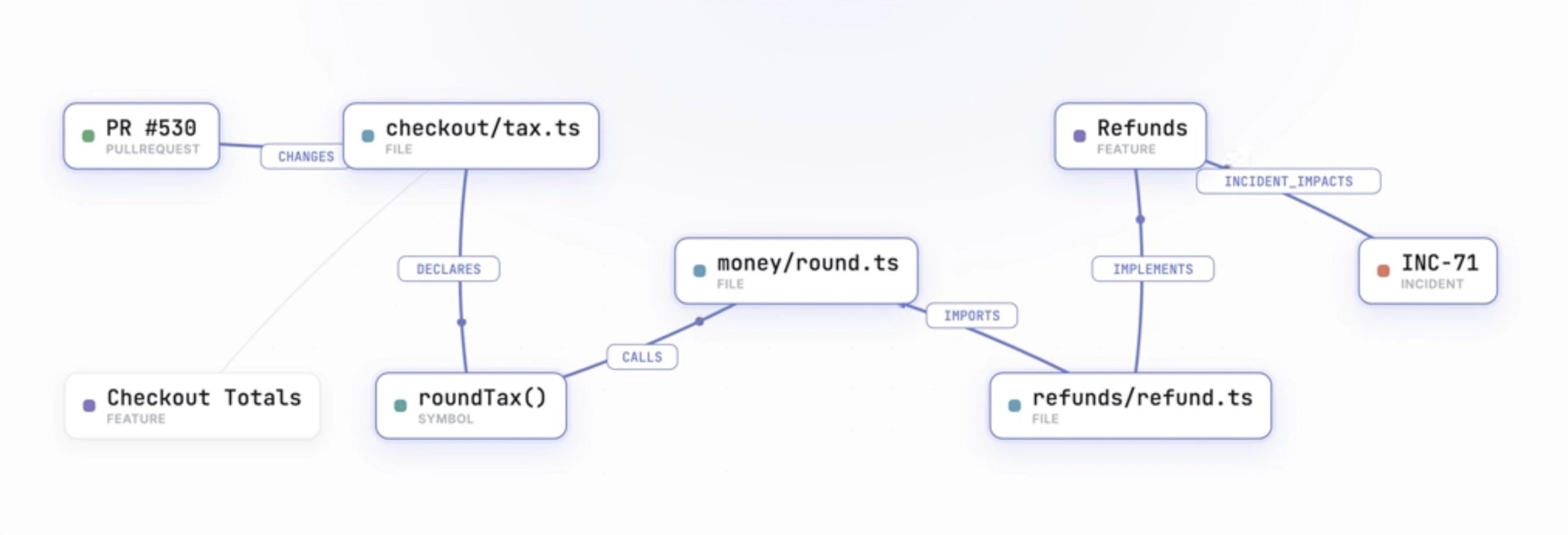
A checkout change connects to shared rounding code, refunds, and a past incident. From Jina's context-graph demonstration.
Investigation harness
For a PR that changes checkout sessions, the planner sends investigators to test payment capture, sessions, cache behavior, webhooks, and retries in parallel. Their evidence guides the planner’s next round, within the configured depth limit. In this checkout example, a retry captures a payment twice. The planner follows that finding into refunds and capture races, while a stale-cart finding leads to another cache investigation. Each round explores what the previous one exposed.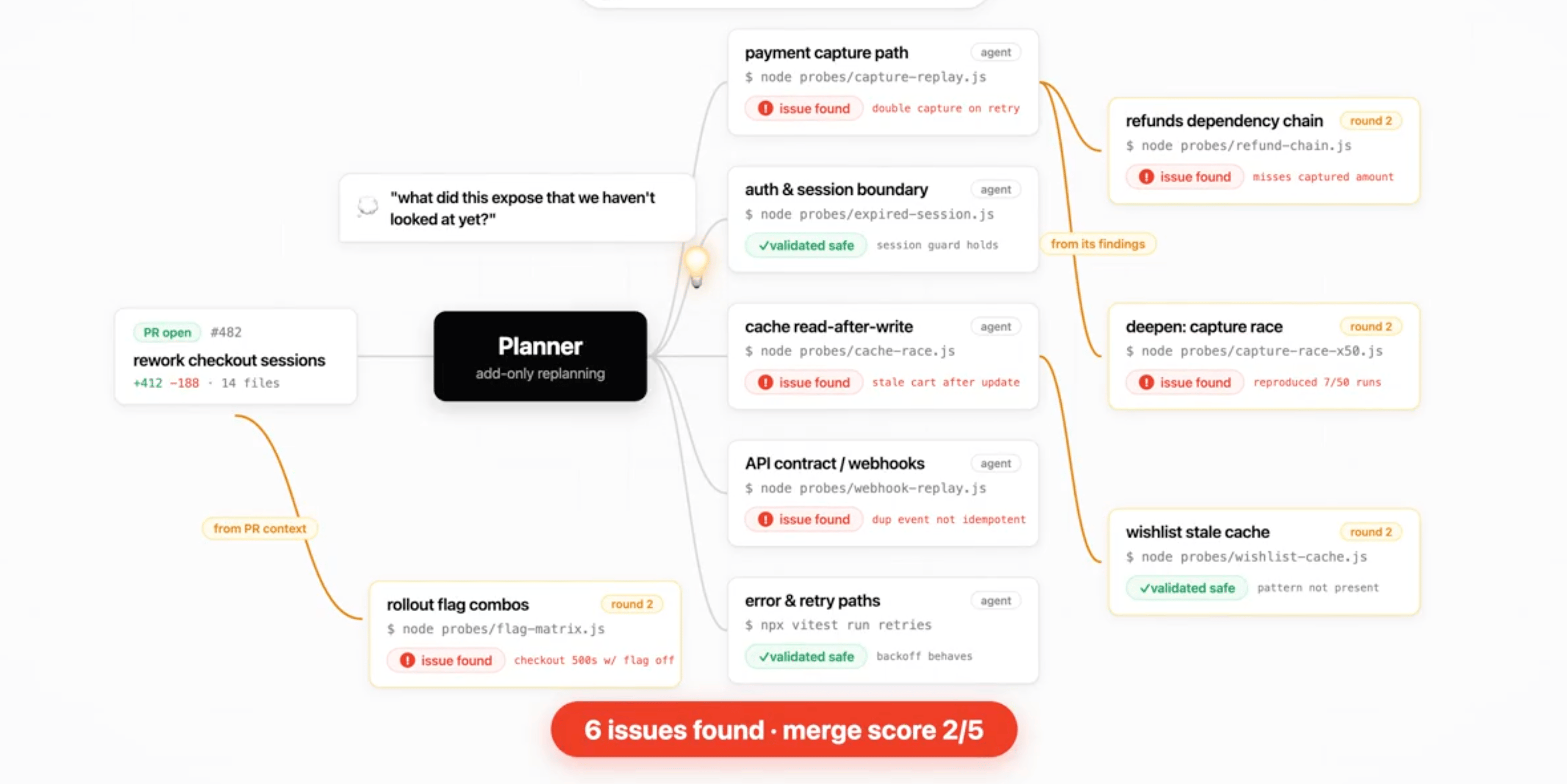
Example: a checkout-session PR leads from payment and cache findings to deeper investigations in round two.